


When to Seek Help and Why It Can Help
Feeling anxious from time to time is a normal part of life. You might feel nervous before an important meeting, worry about a difficult conversation or become uneasy when dealing with uncertainty. In many situations, anxiety is the body’s natural response to stress.
But there is an important difference between occasional anxiety and worry that begins to dominate everyday life.
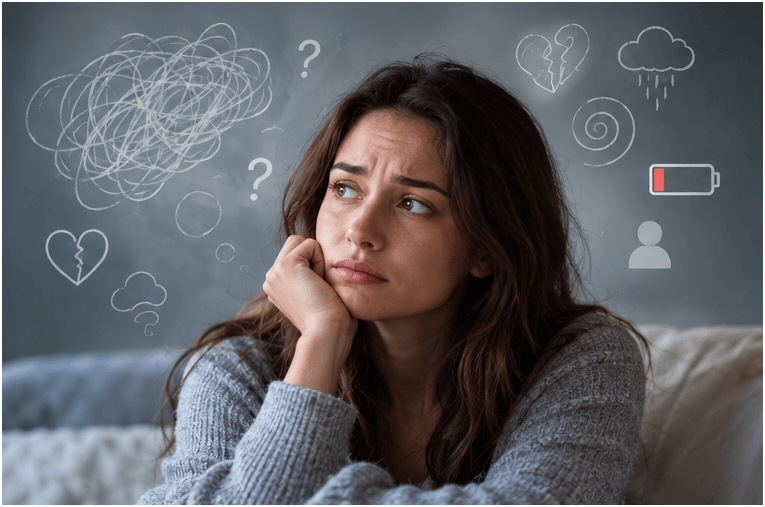
When you cannot seem to shake your concerns and spend much of your day worrying about what might happen, anxiety can start affecting your work, relationships, sleep and overall quality of life.
Anxiety can have emotional symptoms such as restlessness, irritability, difficulty concentrating, persistent worry and repeatedly anticipating the worst. It can also produce physical symptoms, including a pounding heart, sweaty palms, headaches, muscle tension, stomach discomfort, trembling and fatigue.
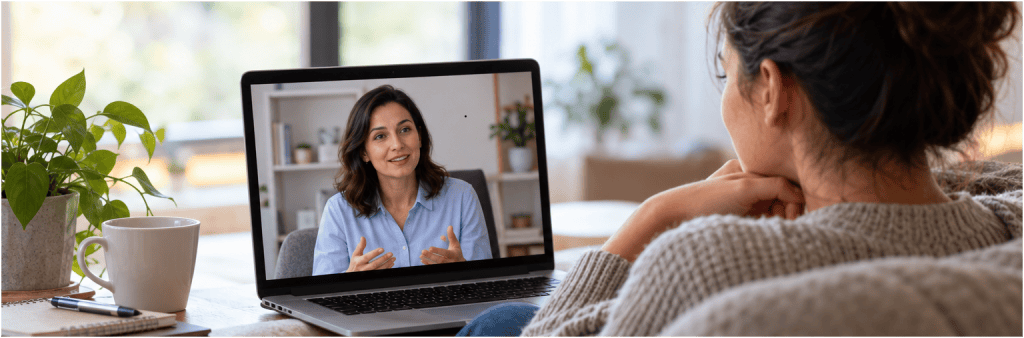
If anxiety is becoming difficult to manage alone, professional support may help. Online therapy for anxiety provides a convenient way to speak with a mental health professional and learn practical strategies for understanding and managing anxious thoughts, feelings and behaviours.
What Is Online Therapy for Anxiety?
Online therapy for anxiety is psychological support delivered remotely through digital communication rather than requiring every session to take place in a therapist’s office.
Depending on the service, therapy may involve video sessions, messaging, therapeutic exercises, worksheets, journals or a combination of these methods.
Although the communication method is different, the fundamental purpose is similar to traditional face-to-face therapy. You work with a therapist to understand your anxiety, identify patterns that may be contributing to it and develop healthier ways of responding.
For example, imagine that you regularly worry about making mistakes at work.
A minor mistake might immediately trigger a thought such as, “I’m going to lose my job.”
That thought creates anxiety. In response, you might repeatedly check your work, ask colleagues for reassurance or continue thinking about the situation after you have gone home.
These behaviours may temporarily reduce your anxiety. However, they can also reinforce the idea that the situation was dangerous and that constant checking was necessary.
Anxiety therapy can help you recognise cycles like these and gradually develop different responses.
How Does Online Therapy for Anxiety Work?
The process varies depending on the therapist, platform and type of anxiety you are experiencing.
At the beginning of therapy, you will usually discuss your symptoms and concerns. A therapist may ask when your anxiety began, what situations tend to trigger it, how frequently symptoms occur and how anxiety affects different areas of your life.
You may then work together to establish goals.
One person might want to reduce constant worrying. Someone experiencing social anxiety might want to feel more comfortable around other people. Another person may want help dealing with panic attacks or anxiety-related sleep difficulties.
Therapy can then focus on identifying the thoughts, behaviours and emotional responses associated with those difficulties.
Many therapists use cognitive behavioral therapy (CBT) or techniques influenced by CBT when working with anxiety.
CBT and Online Anxiety Therapy
CBT is based partly on the idea that thoughts, emotions and behaviours influence one another.
Suppose someone walks into a social event and immediately thinks:
“Nobody wants to talk to me.”
That thought may produce anxiety. The person might remain silent, avoid eye contact or leave early.
Leaving provides immediate relief.
However, because they escaped the situation, they never had the opportunity to discover whether their original prediction was accurate. The next social event may therefore feel just as frightening—or even more intimidating.
CBT can help people recognise these patterns.
A therapist might encourage someone to examine the evidence behind an anxious thought, consider alternative explanations and gradually experiment with different behaviours.
The purpose is not simply to replace every negative thought with a positive one. Instead, therapy can help people develop more balanced ways of interpreting situations.
When Should You Consider Online Therapy for Anxiety?
You do not have to wait until anxiety becomes overwhelming before seeking support.
A useful question to ask is:
How much is anxiety changing the way I live?
Perhaps you have started avoiding situations that previously felt manageable. Maybe you spend hours worrying about work, money, relationships or your health.
You might repeatedly ask other people for reassurance.
Perhaps anxiety keeps you awake at night or makes it difficult to concentrate during the day.
Professional support may be worth considering when anxiety is persistent, difficult to control or interfering with normal activities.
Signs that you may benefit from therapy for anxiety can include:
- Worry that feels difficult to control
- Frequently expecting something bad to happen
- Avoiding people, places or situations because of fear
- Difficulty sleeping because of anxious thoughts
- Problems concentrating
- Repeatedly seeking reassurance
- Feeling restless or constantly “on edge”
- Experiencing anxiety-related physical sensations
- Anxiety interfering with relationships, work or study
- Feeling that worry is controlling your decisions
You do not need to diagnose yourself before seeking help. A qualified professional can help you understand your symptoms and discuss appropriate treatment options.
Why Choose Online Therapy for Anxiety?
One of the biggest advantages of online anxiety therapy is accessibility.
Traditional therapy usually involves travelling to an office at an agreed time. This can be difficult for people dealing with demanding work schedules, childcare responsibilities, transportation problems, mobility limitations or long distances from suitable services.
Online therapy can remove some of these practical obstacles.
There can also be a particular advantage for people whose anxiety itself makes attending appointments difficult.
Someone with social anxiety may feel uncomfortable sitting in a waiting room. A person experiencing panic attacks might worry about having an attack while travelling. Someone with severe worry may repeatedly postpone making an appointment because visiting an unfamiliar place feels intimidating.
Being able to begin therapy from a familiar environment can make accessing support feel more manageable.
Therapy From a Familiar Environment
For many people, home is a comfortable place to talk.
Being able to speak with a therapist from a private room may make discussing difficult experiences easier. There is no unfamiliar waiting room and no journey home immediately after an emotionally demanding conversation.
Online sessions can also be easier to fit around everyday routines.
Instead of accounting for travelling and waiting time in addition to the appointment itself, you may only need to reserve time for your actual session.
Convenience should not be confused with informality, however.
Online therapy is still therapy. It can involve discussing uncomfortable experiences, challenging established patterns and practising new behaviours between sessions.
Understanding the Anxiety-Avoidance Cycle
Avoidance is one of the most important concepts to understand when dealing with anxiety.
When something frightens us, avoiding it provides immediate relief.
Imagine that giving presentations makes you anxious. When asked to present at work, you find an excuse to avoid doing it.
Your anxiety quickly falls.
Your brain may consequently learn:
“Escaping the presentation made me safe.”
The next presentation can then feel even more threatening.
Over time, avoidance may spread. Someone who initially avoids presentations might eventually avoid meetings, networking events or career opportunities that involve speaking in front of others.
Therapy can help people recognise these patterns.
Depending on the individual and the type of anxiety, treatment may involve gradually approaching feared situations in a structured way rather than continually avoiding them.
This does not usually mean immediately confronting your greatest fear.
Instead, the process can involve manageable steps that allow you to develop confidence and discover that anxiety can rise and fall without always needing to escape the situation.
Can Online Therapy Help With Physical Anxiety Symptoms?
Anxiety is not purely psychological.
The body’s stress response can produce very real physical sensations. These can include a rapid heartbeat, sweating, shaking, muscle tension, nausea, dizziness and changes in breathing.
For some people, the sensations themselves become frightening.
A person notices their heart beating quickly and thinks something terrible is happening. That interpretation increases fear, which causes the heart to beat even faster.
The resulting cycle can feel overwhelming.
Therapy can help people understand the connection between thoughts, physical sensations and anxiety and develop strategies for responding differently.
However, physical symptoms should not automatically be assumed to be caused by anxiety.
New, severe, unexplained or concerning symptoms should be discussed with an appropriate healthcare professional.
What Can You Expect From Online Anxiety Therapy?
Early sessions generally focus on understanding what you are experiencing.
Your therapist may ask about your symptoms, situations that trigger anxiety, previous experiences and how anxiety affects your daily life.
From there, you can develop goals together.
Therapy goals should relate to meaningful changes in your life rather than simply producing an abstract goal such as “never feel anxious again.”
For example, your goal could be attending social events more comfortably, sleeping better, reducing reassurance-seeking, travelling without excessive worry or dealing more effectively with stressful situations at work.
You may also be given exercises or strategies to practise between sessions.
Keeping notes about anxious situations can be particularly useful. You might record what happened, what you thought, how anxious you felt, what you did and what happened afterward.
Over time, these observations can reveal recurring patterns.
How Long Does Online Therapy for Anxiety Take?
There is no universal timeline.
The amount of therapy someone needs depends on factors such as the nature of their symptoms, how long the problem has been present, the therapeutic approach being used and their individual circumstances.
Some forms of therapy are relatively structured and designed around a defined number of sessions. Other people benefit from longer-term support.
Progress is also rarely perfectly linear.
You may have a good week followed by a difficult one. That does not necessarily mean therapy has stopped working.
It can be more useful to look at broader changes.
Perhaps anxious thoughts still appear, but you recover from them faster. Maybe you still feel nervous in social situations but no longer avoid them. Perhaps you notice yourself beginning to worry and can use strategies learned in therapy before the worry consumes the rest of your day.
Those can all represent meaningful progress.
How to Get More From Online Therapy
Active participation can make therapy more useful.
Try to be open with your therapist about what you are experiencing, including when a particular strategy does not seem to be helping.
Pay attention to your anxiety between sessions. Notice triggers, recurring thoughts, avoidance behaviours and situations where you successfully handled anxiety differently.
If your therapist suggests exercises, practise them consistently where appropriate.
It is also worth remembering that the relationship between you and your therapist matters. You should feel able to ask questions about their approach, qualifications, confidentiality practices and treatment methods.
When Online Therapy May Not Be the Right Option
Although online therapy for anxiety can be convenient and useful, it is not appropriate for every person or every situation.
Some mental health difficulties require more intensive or specialised treatment. There may also be circumstances where in-person healthcare, psychiatric assessment or another form of professional support is more suitable.
Online therapy services can also differ considerably in how they operate. Before choosing a provider, it is sensible to understand who will provide your therapy, what qualifications they have, how communication works, what confidentiality protections apply and what happens if you require urgent help.
If you or someone else is in immediate danger or experiencing a mental health crisis, routine online therapy should not be treated as a substitute for emergency or crisis services.
Why Getting Help Earlier Can Matter
Anxiety often encourages postponement.
You may tell yourself that you will look for help when work becomes quieter, after an upcoming event or when life feels less complicated.
Sometimes anxiety does improve naturally as stressful circumstances change.
But persistent anxiety can also create habits that become increasingly difficult to break.
Avoiding one uncomfortable situation can turn into avoiding several. Reassurance-seeking can become part of everyday life. Worrying at bedtime can develop into an established sleep problem.
Seeking support does not require waiting until anxiety has reached its worst possible point.
Therapy can help you understand these patterns before they become even more restrictive.
Finding Online Therapy for Anxiety
If you decide to explore online therapy, take some time to understand the service you are considering.
Look at the types of therapy offered, therapist qualifications, communication methods, costs, cancellation arrangements and privacy policies. You may also want to find out whether you can change therapists if the first person you work with does not feel like a good fit.
Most importantly, consider what you want from therapy.
Are you primarily struggling with constant worry? Panic? Social situations? Specific fears? Stress that has developed into persistent anxiety?
Having some idea of what you would like to change can make it easier to discuss your goals with a therapist.
Final Thoughts
Anxiety is a normal human emotion, but it does not have to control your everyday life.
When worry becomes persistent, avoidance begins limiting your choices or anxiety interferes with sleep, work and relationships, professional support may be worth exploring.
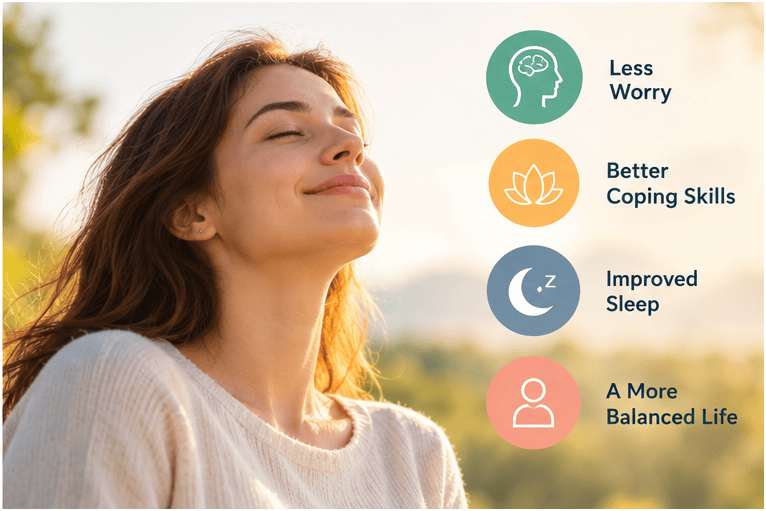
Online therapy for anxiety offers a flexible way to access psychological support without necessarily travelling to a therapist’s office. Depending on your needs, therapy can help you understand anxious thought patterns, recognise behaviours that maintain anxiety and develop practical strategies for responding differently.
The goal is not necessarily to eliminate every anxious feeling.
It is to reach a point where anxiety has less influence over the decisions you make and the life you want to lead.
Frequently Asked Questions About Online Therapy for Anxiety
Does online therapy work for anxiety?
Online therapy can be a useful treatment format for anxiety, particularly when evidence-based psychological approaches such as CBT are delivered appropriately. Whether it is suitable for you depends on your symptoms, circumstances and the type of professional support you need.
What happens in online therapy for anxiety?
You will typically discuss your symptoms, triggers and goals with a therapist. Therapy may then involve identifying anxious thinking patterns, changing unhelpful behaviours, developing coping strategies and practising techniques between sessions.
Is online therapy the same as face-to-face therapy?
The delivery method is different, but many therapeutic principles can be used in both settings. Online therapy takes place remotely, while traditional therapy involves attending sessions in person. The most suitable format depends on your preferences and clinical needs.
Can online therapy help with panic attacks?
Therapeutic approaches are available for panic symptoms and panic disorder, and some can be delivered remotely. Because symptoms such as chest discomfort, dizziness and a rapid heartbeat can also have physical causes, unexplained or concerning symptoms should be medically assessed where appropriate.
How often should I have online therapy?
The frequency of sessions depends on your needs, therapist and treatment approach. Some people attend weekly sessions, while other arrangements may be appropriate in different circumstances.
How quickly can therapy improve anxiety?
There is no single timeline. The duration of therapy and rate of improvement vary between individuals. Rather than expecting anxiety to disappear immediately, it can be helpful to look for gradual changes in how you respond to anxious thoughts, sensations and situations.
Is online therapy private?
Professional online therapy services should explain their confidentiality and privacy practices.
Before starting, review how sessions and messages are handled, what information is stored and the circumstances in which confidentiality may have legal or safety-related limits.
When should I seek help for anxiety?
Consider professional support when anxiety is persistent, difficult to control or affecting your work, relationships, sleep, study or everyday activities.
You do not need to wait until symptoms become severe before discussing them with a qualified professional.
Meta Title: Online Therapy for Anxiety: How, When & Why It Helps
Meta Description: Learn how online therapy for anxiety works, when to consider professional support, and how therapy can help you manage worry, fear and anxious thoughts.
Primary Keyword: online therapy for anxiety
Secondary Keywords: anxiety therapy online, online anxiety therapy, therapy for anxiety, anxiety counselling online, help with anxiety, CBT for anxiety, virtual therapy for anxiety, anxiety treatment online


Leave a Reply