


How, When and Where It Can Affect People
Health anxiety is a condition in which a person experiences excessive worry about their health or the possibility that they have, or may develop, a serious illness. Most people occasionally worry about their health, particularly when they notice an unfamiliar symptom or hear about an illness. However, health anxiety becomes a problem when these fears are persistent, difficult to control, and begin to interfere with everyday life.
A person experiencing health anxiety may pay extremely close attention to their body and interpret ordinary physical sensations as signs of serious disease. For example, a headache might cause someone to fear a brain tumour, or a fast heartbeat could make them worry that they have a heart condition. Even after receiving medical reassurance, the fear may return.
Health anxiety can affect people in many different situations and places. It can occur at home, at work, at school, while travelling, in healthcare settings, and while using the internet or social media. Understanding how health anxiety develops, when it is likely to occur and where it can be triggered can make the condition easier to recognise and manage.
What Is Health Anxiety?
Health anxiety involves becoming excessively concerned about being ill or becoming ill. The anxiety itself is real, even when the medical condition that the person fears is not present.
People with health anxiety can experience genuine physical sensations. Anxiety can produce symptoms such as a racing heartbeat, sweating, dizziness, nausea, headaches, muscle tension and shortness of breath. These sensations can then increase the person’s fears about their health.
This can create a cycle. A person notices a sensation, interprets it as dangerous, becomes anxious and then experiences additional physical symptoms because of the anxiety. Those new sensations can appear to confirm the original fear.
For example, someone might notice that their heart is beating quickly. They become worried that something is wrong with their heart. The fear releases stress hormones such as adrenaline, which can make the heart beat even faster. The person then notices the faster heartbeat and becomes even more frightened.
The Health-Anxiety Cycle
How Does Health Anxiety Develop?
There is no single cause of health anxiety. Different people can develop it for different reasons, and several factors may contribute at the same time.
Previous experiences with illness can be important. Someone who has experienced a serious illness personally, or has watched a family member or friend become seriously ill, may become particularly alert to possible signs of disease. A frightening medical experience can also change how someone interprets bodily sensations.
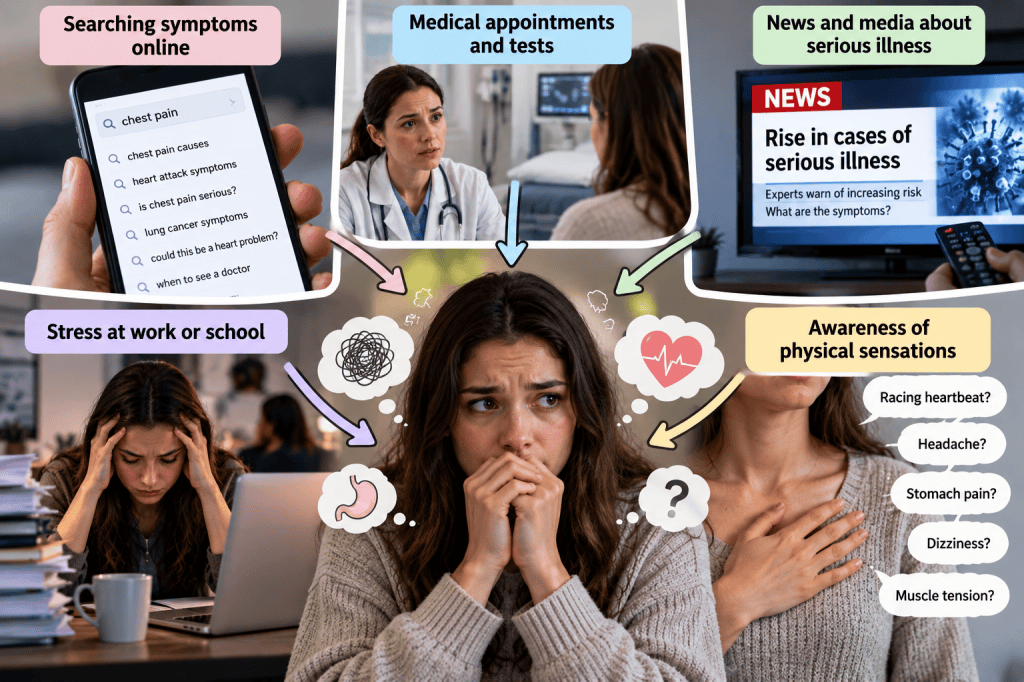
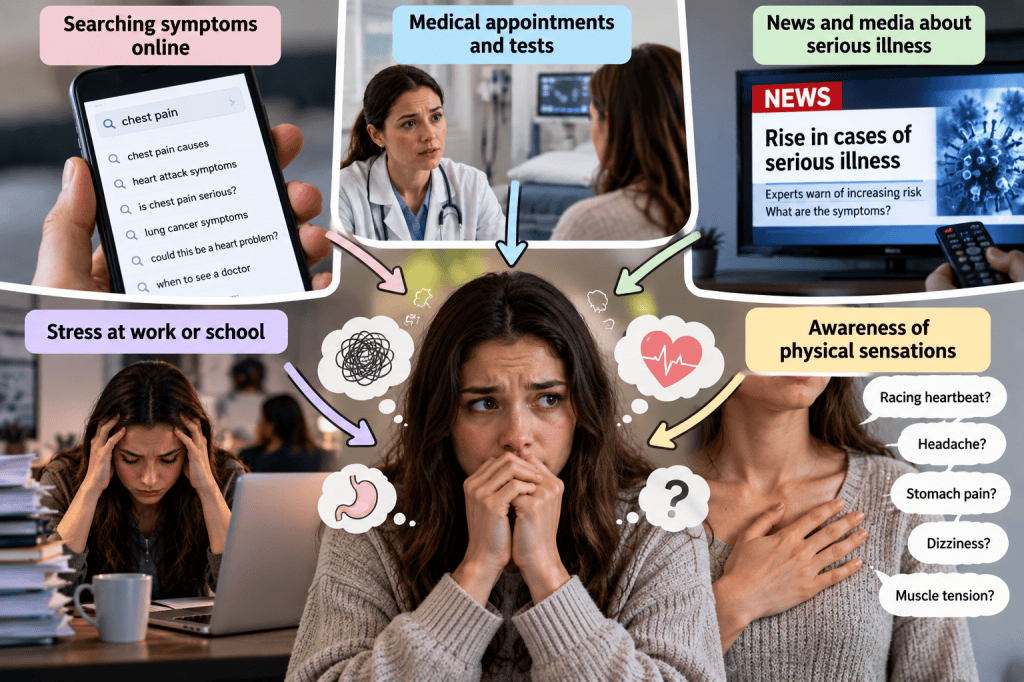
Stress can also contribute. During stressful periods, people may notice physical symptoms such as headaches, tiredness, digestive problems, muscle tension or changes in their heartbeat. If these sensations are interpreted as signs of serious illness, anxiety can increase.
Another important factor is attention. People with health anxiety may regularly monitor their bodies. They might repeatedly check their pulse, examine their skin, feel their lymph nodes or compare different parts of their body. The more closely people monitor their bodies, the more sensations and small changes they are likely to notice.
Reassurance can sometimes become part of the problem. A worried person might ask family members whether they look ill, repeatedly visit healthcare professionals or search online for explanations of symptoms. Reassurance can reduce anxiety temporarily, but the relief may not last.
The person may then seek reassurance again when the next symptom or doubt appears. Over time, this can create a repeated cycle of fear, checking, reassurance and temporary relief.
Internet searching can have a similar effect. Someone may search for a harmless symptom such as a headache and encounter information about both common minor causes and rare serious diseases. When a person is already anxious, they may concentrate on the most frightening explanation rather than the most likely one.
When Can Health Anxiety Happen?
Health anxiety can occur at any stage of life, although people’s worries and triggers may change over time. It does not necessarily begin immediately after an illness or stressful event. Sometimes anxiety gradually develops as a person becomes increasingly focused on their health.
Symptoms may become stronger during stressful periods. Difficulties involving work, education, relationships, money, bereavement or major life changes can increase general anxiety. This may make someone more sensitive to bodily sensations.
Health anxiety can also become noticeable after a genuine illness. Recovering from an illness does not always mean that fear disappears immediately. Someone may continue checking their body because they are frightened that the illness will return.
Medical appointments and tests can also trigger anxiety. Waiting for test results can be particularly difficult because there is uncertainty. Someone with health anxiety may repeatedly think about possible outcomes while waiting.
News stories about disease can sometimes increase health worries as well. If someone repeatedly hears about a particular condition, they may begin checking themselves for its symptoms. Similar effects can occur after learning that somebody they know has become ill.
However, health anxiety does not always have an obvious trigger. A person can experience it even when life appears relatively calm.
Where Can Health Anxiety Occur?
Health anxiety can happen almost anywhere because people naturally carry awareness of their bodies with them.
At home, someone may have more opportunities to check symptoms or search for medical information online. They might repeatedly examine a mole in a mirror, check their pulse or research symptoms late at night.
Workplaces and schools can also be affected. Someone who is worried about their health may find it difficult to concentrate because their attention keeps returning to a symptom. They may struggle to complete tasks or frequently seek reassurance.
Healthcare environments can create mixed feelings. Visiting a doctor may provide reassurance, but hospitals, clinics and waiting rooms can also remind someone of illness. Some people may repeatedly seek medical advice, while others may avoid healthcare because they are frightened of receiving bad news.
The internet is another important environment. Medical information can be extremely useful when it comes from trustworthy sources and is used appropriately. However, repeatedly searching symptoms can expose a person to frightening possibilities without the context that a healthcare professional can provide.
Social media can contribute too. Posts about serious illnesses may make rare conditions seem more common than they actually are because dramatic experiences naturally attract attention and are widely shared.
Common Health-Anxiety Triggers
Signs and Symptoms
Health anxiety can affect thoughts, emotions, behaviour and the body.
A person may frequently think that they have a serious illness, worry that doctors have missed something or believe that ordinary sensations indicate disease. They might repeatedly imagine becoming seriously ill in the future.
Behaviour can include frequently checking the body, repeatedly researching symptoms, asking other people for reassurance or seeking repeated medical opinions. In some cases, the opposite occurs: the person avoids doctors, hospitals or health information because these things feel too frightening.
Emotionally, health anxiety can cause fear, frustration and distress. It can be exhausting to remain alert for signs of illness for long periods.
Physical anxiety symptoms can include a rapid heartbeat, sweating, shaking, dizziness, stomach discomfort, headaches and muscle tension. Importantly, physical symptoms should not automatically be assumed to come from anxiety. New, severe, persistent or concerning symptoms can still require appropriate medical assessment.
Effects on Everyday Life
Health anxiety can have a significant effect on quality of life.
Concentration may become difficult when a large amount of mental energy is spent thinking about illness. A student may struggle with coursework, while an employee may find it difficult to focus on their job.
Relationships can also be affected. Friends and relatives may initially provide reassurance whenever the person is frightened. However, repeated conversations about the same health concerns can become difficult for everyone involved.
Sleep may also suffer. At night there are often fewer distractions, making bodily sensations easier to notice. Searching symptoms online late at night may increase anxiety further and interfere with sleep.
Some people begin avoiding exercise because a faster heartbeat or heavier breathing feels frightening. Others may avoid travelling because they worry about becoming ill away from medical facilities. Gradually, health anxiety can restrict activities that the person previously enjoyed.
Managing Health Anxiety
Health anxiety can be managed, and professional support is available when it significantly affects everyday life.
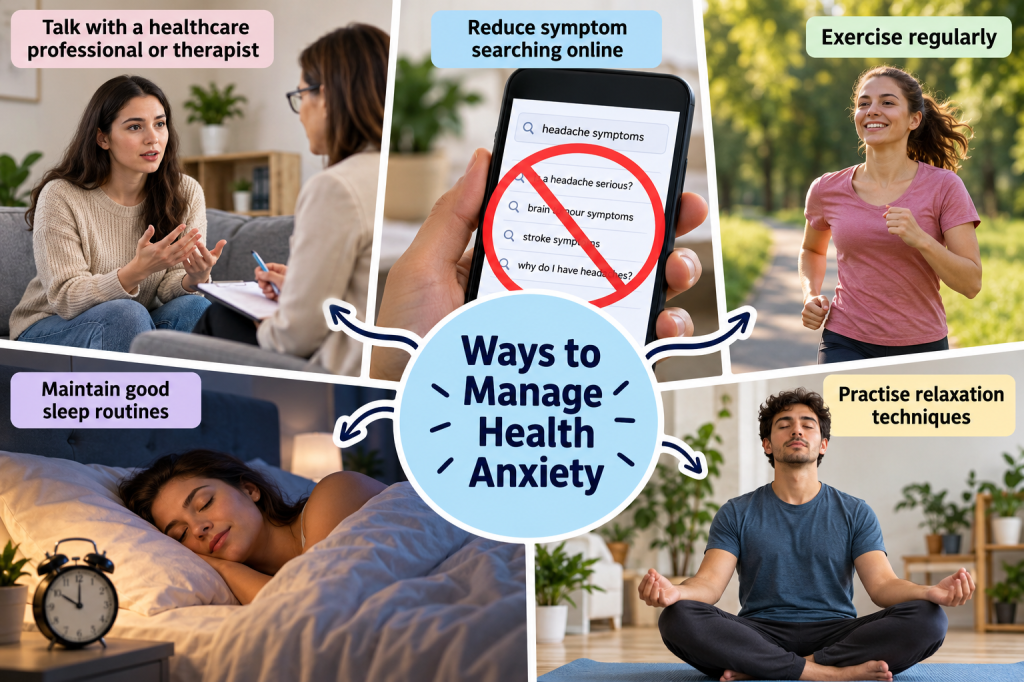
One approach is learning to recognise patterns. Keeping a simple record of triggers, thoughts, emotions and behaviours can help someone identify how the anxiety cycle operates. For example, they may discover that searching symptoms online reduces fear for ten minutes but makes them considerably more worried later.
Reducing repeated checking can also be useful. Rather than immediately checking a symptom every time anxiety appears, a person can practise delaying the behaviour. This can help them learn that anxiety can decrease without constant reassurance.
Cognitive behavioural therapy, usually called CBT, is commonly used for anxiety-related difficulties. CBT examines connections between thoughts, feelings and behaviours. In health anxiety, therapy can help a person consider alternative explanations for bodily sensations and gradually change behaviours that maintain anxiety.
This does not mean ignoring genuine health concerns. The aim is to develop a more balanced response to uncertainty and symptoms.
Healthy routines can support overall wellbeing as well. Regular sleep, suitable physical activity, eating regularly, relaxation and maintaining social activities may help reduce general stress.
Reliable health information is also important. Using reputable medical sources rather than repeatedly moving between search results, forums and social-media posts can reduce exposure to misleading or frightening information.
A healthcare professional can help when anxiety is persistent, difficult to manage or interfering with normal activities. They can consider both physical symptoms and psychological wellbeing and discuss appropriate support.
Supporting Someone With Health Anxiety
Friends and family can provide valuable support. It is important to remember that the person’s fear feels genuine, even if other people believe the feared illness is unlikely.
Listening calmly can be more helpful than dismissing the worry. At the same time, constantly providing reassurance may unintentionally maintain the cycle.
Instead, supporters can encourage the person to use coping strategies they have learned and seek appropriate professional support when needed. They can also encourage normal activities rather than allowing anxiety to dominate everyday life.
Patience is important because improvement is not always immediate. Anxiety may become stronger or weaker at different times, particularly during periods of stress.
Conclusion
Health anxiety is more than occasionally worrying about becoming ill. It can involve persistent fears, repeated checking, reassurance seeking and heightened attention to normal bodily sensations. The resulting anxiety can itself produce physical symptoms, creating a cycle in which fear and bodily sensations reinforce one another.
There is no single answer to how health anxiety begins. Personal experiences of illness, stressful events, patterns of thinking, body checking, reassurance seeking and exposure to health information can all play a role.
It can happen at different times in a person’s life and may become particularly noticeable during stress, after illness, while waiting for medical results or after hearing about disease. It can also occur in many different places, including at home, school, work, healthcare settings and online.
Most importantly, health anxiety can be addressed. Recognising the cycle, reducing repeated checking and reassurance seeking, developing healthier responses to uncertainty and accessing appropriate professional support can all be helpful. Treatments such as CBT can help people change patterns of thought and behaviour that maintain anxiety.
Understanding health anxiety also helps reduce misunderstanding surrounding it. The distress experienced by someone with health anxiety is genuine. With appropriate knowledge and support, people can learn to respond differently to frightening thoughts and physical sensations and reduce the impact that health anxiety has on their everyday lives.


Leave a Reply